< All Blog Posts


Tens of thousands of companies today rely on Segment as their primary Customer Data Platform (CDP). Within SaaS —B2B and B2C alike— they typically hook up their platform and website(s) as source, and route incoming data to destinations such as CRMs, marketing automation platforms, customer success systems, analytics, data warehouses, advertisement systems, etc...
Using Segment allows these businesses to quickly access the data they need without having to manually transfer it from one application or database to another. Data pipelines also provide an efficient way for companies to process large amounts of data in order to gain insights into customer behaviour, market trends, and more.
As PLG-related scoring and signals have become a requirement in modern SaaS stacks, many businesses are waiting for their preferred vendors to add such metrics into their feature set. However, often these popular Segment destinations are simply not build to possibly produce those scores and signals, as they lack broader context. A great example is simply to trying to fit in B2B context into a tool that only processes users, and not companies...
On the other hand, Segment provides computed traits, which are very useful computations on data stream characteristics. They do however not take into consideration customer journey stages, conversions, or other core PLG components. These computed traits can be used to measure the performance of certain activities and track user engagement, but they lack the ability to provide a full view of the customer's journey from initial contact over conversion and expansion to churn.
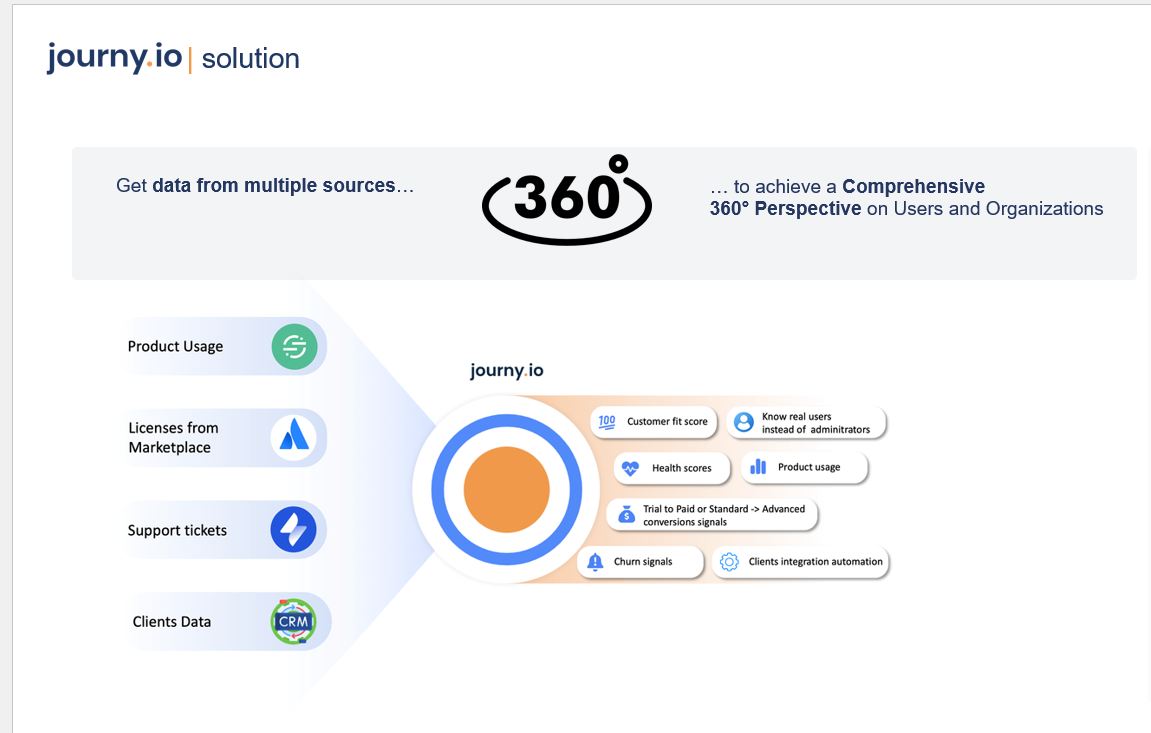
PLG signals and scoring are indeed the result of a comprehensive process that requires —as a start— that user and account profiles must be build from the incoming Segment data. One cannot simply build PLG metrics from a data stream itself. It further involves the use of machine learning algorithms to correlate these profiles with large amounts of data and smart segmentation techniques to identify patterns in customer behaviour against positive and negative customer journey movement (signals) ...and eventually PLG metrics.

To start injecting PLG traits into your data streams, here’s what you need to do:
Driving a PLG motion means more then just getting the data everywhere. It’s absolutely a great start, but you also want to perform actions across your different ecosystem apps, and optimize those actions for maximum outcome.
For example, when a trial user becomes most likely to buy, you may want to send a message to Slack, add a task for your sales team in HubSpot, and tell Intercom to start an in-app tour. All this to achieve the goal of getting a conversion. Now, if the trial does not become a paying customer after 15 days, you may want to instruct customer.io to send out follow up SMS messages and emails, and send a notification email to the RevOps team.
While this is all possible when natively using journy.io, you still may want to solely rely on Segment to orchestrate these actions. We therefore also enabled our playbooks to send events to Segment. These native ‘track’ events will allow Segment to act properly with its different destinations.
Feel free to go on journy.io and register for your 14-days trial account.
Create your account and watch your revenue metrics improve. No extra dashboards to manage, no extra tools or coding needed. All from data you already have and tools you're already using.

.png)